Damp and condensation surveys
Find out why the wall is wet before you pay to fix it
Condensation, penetrating damp, rising damp and plumbing leaks can look alike on a bedroom wall. Each needs a different fix. Our survey works out which one you are dealing with and puts the evidence in writing.
- Moisture meter and thermal camera on site
- Ventilation and cold-bridge checks
- Written findings with dated photographs
Four common causes
Same stain, different problem
Getting the diagnosis wrong is expensive. A damp-proof course will not stop condensation, and a dehumidifier will not stop a leaking gutter. These are the patterns we look for.
| Cause | Typical signs | Usual fix |
|---|---|---|
| Condensation | Black spotting in corners, behind furniture and around windows. Worse in winter. Often on outside walls and in bathrooms and bedrooms. | Better extraction and airflow, steadier heating, and dealing with cold surfaces. |
| Penetrating damp | Patches that grow after rain, often near gutters, pointing, window frames or a flat roof. Can appear at any height. | Repair to the outside of the building, then drying and making good inside. |
| Rising damp | A tide mark low on ground floor walls, salts on the plaster and decayed skirting. Less common than often claimed. | Confirmed diagnosis first, then work to the damp-proof course and replastering where needed. |
| Leaks | A defined wet area, often near pipes, a bath, a shower tray or below a flat upstairs. Readings stay high in dry weather. | Plumbing repair or a neighbour's repair, then drying and treatment. |
On site
What we check during the visit
A technician walks the affected rooms and the areas around them, including the outside where it is safe and accessible. We measure rather than guess.
- Moisture readingsTaken across the affected wall and at clean reference points, so wet and dry areas can be compared.
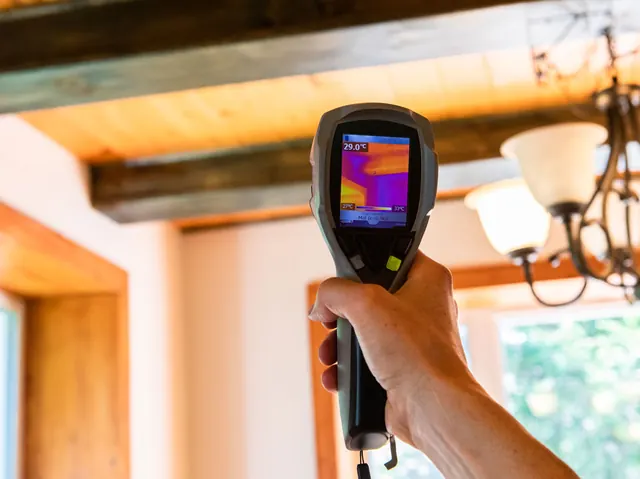
- Thermal imagingA thermal camera shows cold spots, missing insulation and moisture patterns that are invisible to the eye.
- VentilationExtractor fans, trickle vents, air bricks and whether windows and doors allow air to move.
- Cold bridgesLintels, window reveals, corners and ceiling edges where cold transfers through the structure and condensation settles.
- Leaks and defectsSeals, pipework, gutters and visible defects that could be letting water in.

Got a disputed damp complaint? Book an inspection and get the facts on paper before anyone commits to a repair.
Request an inspectionWhen to book one
Who asks us for a survey
Before buying or taking on a block
Investors and block managers use a survey to understand known damp before they commit, and to estimate what will need doing in the first year.
After a tenant complaint
Landlords, agents and housing providers need to know quickly whether there is a hazard and what is causing it. A survey gives you the basis for a written reply.
When mould keeps returning
If a room has been cleaned or painted more than once, the cause has not been found. A survey stops you paying for the same treatment again.
When there is a disagreement
Between landlord and tenant, between neighbours, or between a leaseholder and the freeholder. Measured readings and dated photographs move the discussion on.
Written findings
What you receive after the survey
The findings are written for the person who has to act on them, whether that is a landlord, a housing officer, a block manager or a homeowner. No jargon without an explanation.
- Rooms and areas inspected
- Moisture readings with locations
- Thermal images where relevant
- Dated photographs
- The likely cause, explained
- What should be fixed, and by whom
- Advice for the occupant
- A fixed quote if treatment is needed
Survey questions
About our damp surveys
Is this the same as a building survey for a purchase?
No. Our survey looks specifically at damp, condensation and mould: where moisture is, what is likely causing it and what should be done. It does not value the property or assess its general structure. If you are buying, it sits alongside your main survey and gives you detail on one issue.
Can you tell whether the tenant is causing condensation?
We record what we find, which may include drying washing indoors, closed vents or heating patterns. We also check the building: extraction, trickle vents, insulation and cold spots. Most cases involve both, and the report sets out each factor so the conversation is based on evidence rather than blame.
Do you drill holes or remove plaster?
Our survey is non-invasive. We use a moisture meter, a thermal camera and a visual inspection. If we think opening up a wall is the only way to confirm a cause, we will say so in the findings so you can decide what to do next.
What happens if you find mould during the survey?
We photograph it, record the extent and include a fixed written quote for remediation with the findings. You decide whether to go ahead. Nothing is carried out without your written approval.
How soon can you visit?
Same-day and next-day appointments are often available. If you are working to a deadline, such as a tenant complaint or a purchase date, tell us when you book and we will try to fit around it.
Reviews
What clients say on Google
5.0
Based on 28 Google reviews
Great service from start to finish. The team was professional, explained everything clearly, and used high-quality equipment. Polite, reliable, and very thorough. I definitely recommend this company
We had a particularly challenging repair project for WBLAM to handle, and they were excellent throughout. Dimitri worked exceptionally hard, remained flexible, and was always helpful with any requests we had. The same can be said for every member of the team we dealt with. I would highly recommend them.
Reviews are loaded from Google and shown as written.
Related reading
Request an inspection
Tell us about the property
Give us the postcode and the best way to reach you. We will call back to agree a time and confirm who needs to be on site.
- Call07488 848 594
- WhatsAppSend photos on WhatsApp
- Emailcontact@wblam.co.uk