Whitechapel, Bow, Poplar, Wapping and the Isle of Dogs
Mould remediation in Tower Hamlets
Georgian terraces, converted warehouses, post-war estates and glass towers, often on the same street. We work out which kind of building we are in, why it is holding moisture and what will stop the mould coming back.
- Covering E1, E2, E3 and E14
- Flats, blocks and commercial units
- Dated report for your records
Local housing
Why mould is common in Tower Hamlets buildings
Few boroughs pack so many building types into so small an area. That variety is exactly why a quick look and a spray rarely solves the problem here.
Older terraces and conversions
Georgian and Victorian houses in Spitalfields, Stepney and Bow, many divided into flats, plus warehouse conversions in Wapping and Limehouse. Thick solid walls, basements and large single-glazed or steel windows give moisture plenty of cold surfaces to settle on.
Post-war estates
Council-built blocks and towers across Bethnal Green, Poplar and Stepney. Concrete frames, exposed balconies and small kitchens make cold bridges and condensation the usual suspects, especially in corner and top-floor flats.
Riverside and Docklands towers
High-rise apartments around Canary Wharf and the Isle of Dogs are airtight and heavily glazed. They rely on mechanical ventilation, and when it underperforms, mould appears on window frames, in wardrobes and behind beds.
Clients in the borough
Who we work with in Tower Hamlets
A large share of homes here are flats in managed blocks, so many of our instructions come through block managers and managing agents who need communal areas and individual flats handled under one scope. Social housing is also a big part of the borough, and housing providers use us for survey and remediation capacity with dated evidence.
For private landlords and letting agents, the council's additional licensing scheme covers shared homes across the whole borough, with a selective scheme in parts of Whitechapel, Spitalfields and Weavers. Restaurants, shops and offices use our commercial service, with early starts or weekend work on request.
Working in managed buildings
- Building rules followedConcierge sign-in, lift bookings and permitted hours.
- Occupant contactWe arrange access with residents and keep you copied in.
- Who fixes whatThe report separates flat issues from communal ones.
A block or a single flat in Tower Hamlets? Tell us how many units are affected and we will plan the survey.
Request an inspectionCoverage
Postcodes and neighbourhoods we cover
We cover the whole of Tower Hamlets, from Shoreditch's eastern edge to the Lea.
- E1Whitechapel, Spitalfields, Stepney, Shadwell, Wapping
- E2Bethnal Green, Weavers, Globe Town
- E3Bow, Mile End, Bromley-by-Bow, Old Ford
- E14Poplar, Limehouse, Isle of Dogs, Canary Wharf, Blackwall
Watch the process
See a treatment from start to finish
Containment, HEPA vacuuming, removal, antimicrobial treatment and finishing, filmed on a real job. It is the same sequence your tenant or occupant will see on the day.
Request an inspectionPlays from YouTube once you press play.
Results
Before and after, from real jobs
Photographs from Wblam jobs in London homes, flats and lofts. The same kind of images goes into the report you receive.
Tower Hamlets questions
Questions from Tower Hamlets clients
Do I need a licence to let a shared flat in Tower Hamlets?
Tower Hamlets Council runs an additional licensing scheme across the whole borough for privately let homes shared by three or more people from two or more households, and a selective scheme in parts of Whitechapel, Spitalfields and Weavers. Check the council's website for your address. Either way, a dated mould report helps show how you dealt with any damp hazard.
Can you work in a high-rise block with a concierge and permit system?
Yes. Tell us the access arrangements when you book and we will follow the building's rules on parking, lifts, working hours and contractor sign-in. If the block manager needs our details in advance, we send them before the visit, and we keep residents informed about timings so the work causes as little disruption as possible.
Why is there mould in my warehouse conversion in Wapping?
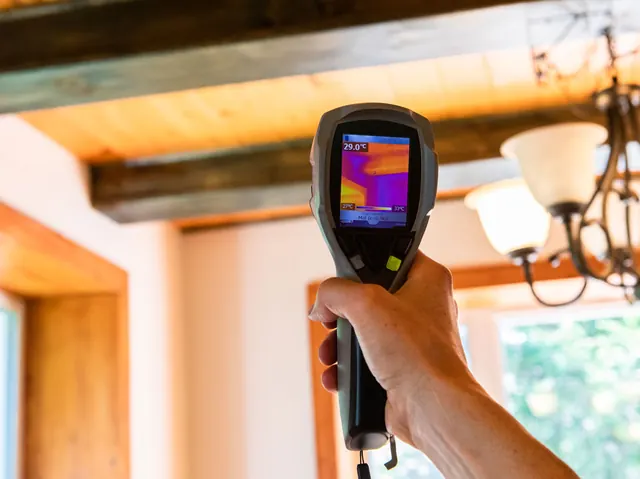
Converted warehouses often have thick brick walls, large windows and exposed steel or concrete. Those elements stay cold, and if the conversion did not add enough insulation or ventilation, condensation forms on them. Riverside buildings can also suffer penetrating damp. Our survey separates these causes with moisture readings and thermal imaging.
Can you treat mould in a restaurant or shop without closing it?
Often, yes. For commercial premises we can start early or work at weekends on request, and contain the work area so the rest of the space stays usable. We plan the timing with you after the survey and include it in the written quote.
Nearby and related
Request an inspection
Tell us about the property
Give us the postcode and the best way to reach you. We will call back to agree a time and confirm who needs to be on site.
- Call07488 848 594
- WhatsAppSend photos on WhatsApp
- Emailcontact@wblam.co.uk